
Find Who Owns McDuffie Property
McDuffie County's official route starts with the Search Records page, which opens the qPublic parcel viewer. Pull up the parcel, note the parcel key, and copy the owner text exactly. Then carry both into the deed index and confirm the grantee match carefully.
- Search the address in qPublic and save the parcel key and owner text.
- Search that name as grantee in the GSCCCA index.
- Match the newest deed's description to the land.
- Check Georgia eCorp for an entity or Probate Court for an estate.
This is how to answer who owns a property in McDuffie County without mistaking a quick clue for legal proof. The parcel key is the thread that holds the search together. A common surname, a repeated road name, or a mailing address in another town can mislead you. Any one can send you to the wrong tract. The key prevents that drift. Write down each source you consulted and the date you searched. That way the ownership lookup can be repeated when the roll or deed index changes later.
McDuffie Ownership Source Roles
Each McDuffie County source plays a different role. The assessor roll reflects the last certified tax roll, so its owner field can sit behind the market. A newly recorded deed may show a fresher grantee. Read the roll and the deed together, with the map as the tiebreaker, and each record answers its own part of the ownership question.
| Source | Owner Info It Gives | Access |
|---|---|---|
| qPublic assessment roll | Owner text and mailing address when displayed | County Search Records link |
| GSCCCA deed index | Grantee on the latest recorded deed | Index; images may require login or payment |
| Georgia eCorp | Business status, agent, officers, and control number | Free state search |
| McDuffie/Thomson PublicGIS | Parcel geography and map identifier | Public viewer; exact layers unverified |
The Clerk of Court keeps the instruments: deeds, plats, liens, and PT-61 transfer records. PublicGIS places a tract on the map but proves nothing about title. And remember that the person occupying a house can differ from the owner of record.
McDuffie's Certified Roll Has a Time Boundary
McDuffie County cautions that its assessment data reflects the last certified tax roll. Other details can change at any time. It publishes no fixed qPublic refresh interval. So a displayed owner may lag a recent closing by some margin. That is why a full ownership answer includes a recording-date check on the deed itself. When you open a live qPublic card, read its owner-field label as written. Preserve the parcel number. Never assume the screen was updated the same day a sale closed.
Recent-sale rule. A just-recorded deed is a stronger recency clue than an assessment roll tied to its last certification.
Mailing and Situs Clues Identify Different Things
A situs address locates the land itself. A mailing address serves a different purpose. It receives the tax bill, and it may be a post-office box, a business office, or a representative's address. Matching on the mailing line alone can point to the wrong person entirely. To settle who owns McDuffie County land, anchor the search to the parcel. Do not chase the envelope.
- Owner of record
- The party named in the relevant public ownership record.
- Grantee
- The recipient named in a deed.
- Title
- Legal rights in land; an online owner field is not a title opinion.
- Situs address
- The physical property location, distinct from the tax-mail address.
Rural tracts need more than street text. Compare the subdivision, lot, acreage, book and page, and the full legal description. McDuffie County's address-request form leans on several of these clues precisely because an address alone may fail to identify the tract.
McDuffie LLC, Trust, and Estate Owners
When qPublic lists a company as owner, copy its exact name into the Georgia eCorp search. The business name, control number, registered agent, officer, and designated-agent fields will explain what the entity is. None of that makes an agent the owner of record. The recorded McDuffie County deed remains the controlling land record.
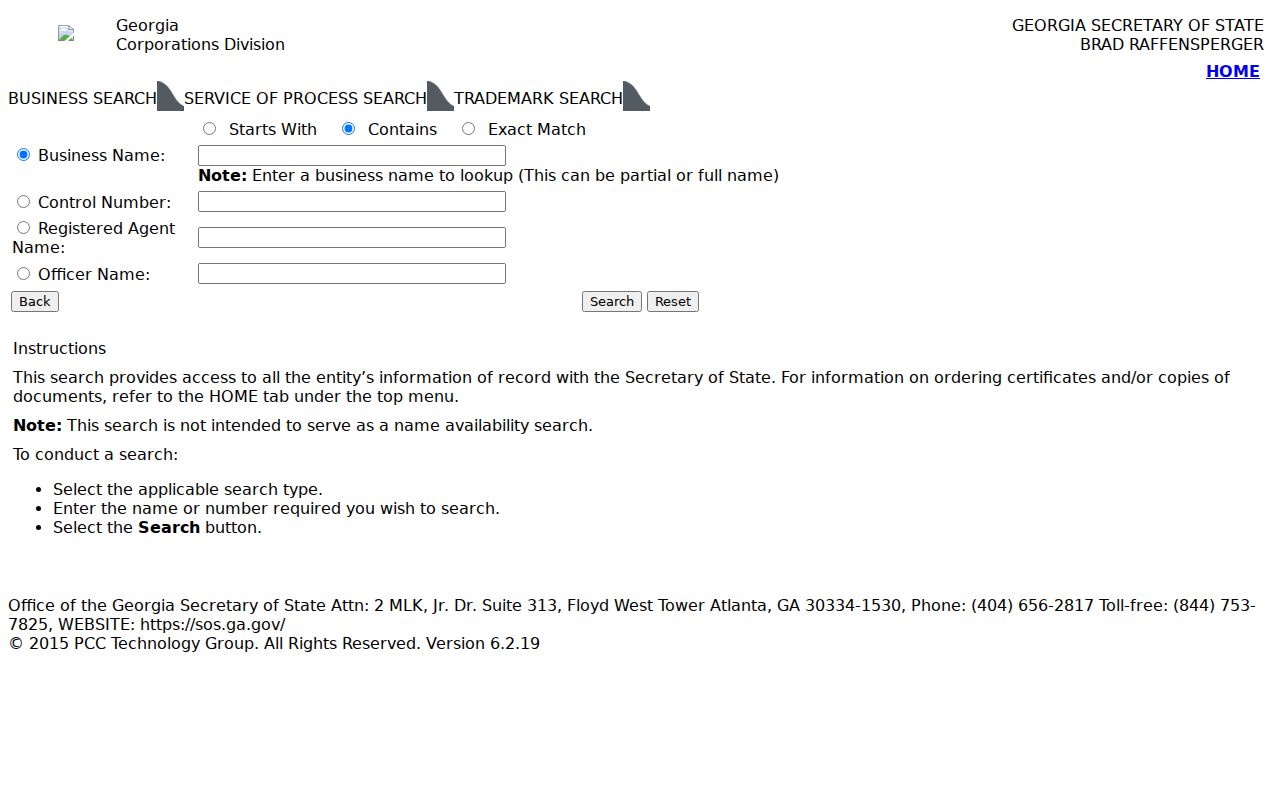
Treat the state entity search as a cross-check on the exact grantee name. It never substitutes for McDuffie County ownership records. Trusts and estates take more digging. The explanation may sit in a deed from an estate. It may also sit in an executor's deed, a court order, or a Probate Court file. Those papers establish a representative's authority; a death certificate alone never transfers land.
Confirm McDuffie's Latest Grantee
The GSCCCA form lets you narrow a search to McDuffie County, then filter by party role, instrument type, name, and date range. Run the assessor's name as grantee. Then compare the newest plausible deed or court order against the parcel's legal description before trusting it. The central search screen shows dates beginning January 1, 1990, though McDuffie County does not publish that as an official cutoff. Images and premium tools may require login or payment. For the full recording workflow, see the deed guide or contact Clerk Gina J. Timmerman's office.
FANS Watches Future McDuffie Filings
McDuffie County posted details on the GSCCCA Filing Activity Notification System in 2025. FANS is free and voluntary. It emails a notice whenever filing activity tied to a registered name appears. It is not guaranteed complete or accurate, though. An alert cannot tell you who owns a property today. It never replaces the instrument itself; treat it as a prompt to verify with the Clerk.
McDuffie Homestead Data Is Only a Clue
An exemption indicator suggests only that an application was accepted for assessment purposes. It cannot tell you who occupies the land or establish title. McDuffie County's assessor administers homestead and similar exemptions against the tax digest. But the ownership question still turns on the matching parcel and its recorded conveyance. Do not read personal circumstances into an exemption field. Use it strictly to interpret the assessment record. If the owner name, parcel number, or exemption status looks inconsistent, ask the Tax Assessor for the existing certified-roll record. It will carry its effective tax year.
The same caution applies to the tax bill. The party receiving tax mail could be the owner. It could also be a representative, a lender-related address, or an entity contact. Remember that the roll and the bill exist for administration. They are not a directory of who lives on the land.
A McDuffie Tax-Sale Row Does Not Settle Title
McDuffie County's tax-sale list shows why source roles matter. One row can list a defendant in fi-fa. A separate field names the current record holder. The same row may carry the map and parcel, address, amount, tax years, deed book, and legal description, all of them strong leads. The dated PDF proves no sale closed. It cannot settle who owns the property today.
Take the parcel key and deed-book citation back to the recorded chain. Compare later deeds, releases, or court orders. Never treat an old tax-sale row as current without checking with the Tax Commissioner and the Clerk.
The lesson is simple. Administrative labels answer only the question their document was built to answer, while the latest matched deed remains the confirmation step for ownership in McDuffie County property records.
Ask McDuffie Offices for the Existing Record
When qPublic will not load or an address search comes up empty, call the Tax Assessor at 706-595-2128. Have the street address ready, plus the parcel number, subdivision, and lot if you know them. Staff there answer phones weekdays from 8 a.m. to 5 p.m. A quick call can settle which office holds the record you need. The assessor cannot resolve questions of title, though.
Deeds live with the Superior Court Clerk. The Clerk is reachable at 706-595-2134 or in person at 210 Railroad Street, Room 1401, in Thomson, Monday through Friday from 8:30 a.m. to 5 p.m. Anyone may inspect and copy records during those hours. Ask about copy charges before placing an order, since the fee schedule is not posted online.
A Georgia Open Records Act request is one more path to an existing record. The law generally gives an agency three business days to produce the material. The agency can also explain its timetable and estimated cost. Keep the request narrow. Name a parcel, a date range, a document type, or a book and page. An agency can hand over what exists. It has no duty to build a new ownership report for you.
Certified Copies Serve a Different McDuffie Need
An index result only identifies an instrument. When a transaction, estate matter, or boundary dispute turns on the record, pull the complete deed. Ask whether a certified copy fits the need. McDuffie's 2025 eCertification notice describes a remote route through the GSCCCA portal. There, create an account, select McDuffie and the document type, wait for clerk processing, pay after authorization, and download the secured PDF.
That service does not replace a title examination. A deed can coexist with easements, liens, restrictive covenants, probate claims, or later corrective instruments. The deed-records page explains the single-instrument route. Complex reliance may call for a Georgia attorney or title professional.
Keep that distinction clear. An owner lookup identifies the most likely public-record owner. It documents the reasoning and flags the point where a quick answer should become a formal title inquiry.
Limits of McDuffie Owner Lookups
An owner result has limits. It does not say who lives there. It also cannot settle a boundary, reveal every beneficial interest, replace a title search, or override Georgia Safe at Home, which substitutes an eligible survivor's address in public records.
Lawful use. A McDuffie County owner lookup supports purchase diligence, boundary and easement questions, estate work, and property history. Never use owner information to stalk, intimidate, harass, or harm anyone.
For present-record details, continue to McDuffie current owner records. For earlier owners, use the backward-chain guide.